

.jpg) Von: Ethan
Von: EthanMaterialwissenschaft · Verpackungstechnik
Warum CPET-Kunststoff der Ofenhitze standhält, während PET dies nicht kann
Eine molekulare Erklärung, wie die Kristallisation ein gewöhnliches Polyester in ein Material verwandelt, das so konstruiert ist, dass es Öfen bei 400 °F übersteht – und was das für die Lebensmittelverpackungsindustrie bedeutet.
Die direkte Antwort: Kristallisation macht den Unterschied
CPET-Kunststoff kann Ofentemperaturen von bis zu 204 °C standhalten, da es während der Herstellung einen kontrollierten Kristallisationsprozess durchläuft , während Standard-PET weitgehend amorph bleibt und bei Temperaturn von nur 160 °F (71 °C) weich wird. Dieser einzige strukturelle Unterschied erklärt nahezu jeden praktischen Unterschied zwischen den beiden Materialien.
Normales PET, der Kunststoff, der in Getränkeflaschen und durchsichtigen Klappbehältern verwendet wird, ist so konzipiert, dass er transparent und flexibel bleibt. Seine Molekülketten sind zufällig angeordnet, ohne die feste, geordnete Struktur, die nötig ist, um Hitze zu widerstehen. CPET, die Abkürzung für Crystallized Polyethylene Terephthalate, ist das gleiche Basispolymer, wird jedoch anders verarbeitet, sodass sich ein erheblicher Prozentsatz seiner Molekülketten in starren, geordneten kristallinen Bereichen zusammenfügt. Diese kristallinen Zonen wirken wie eine mikroskopische Verstärkung und verleihen dem Material die thermische Stabilität, die für die Verwendung im Ofen, in Dual-Backofen-Schalen und in Heißabfüllverpackungen erforderlich ist.
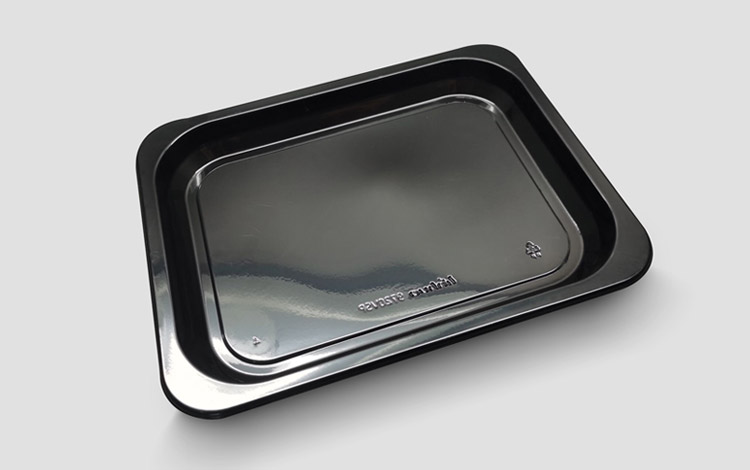
CPET-Kunststoff
.jpg)
Das Verständnis dieser Unterscheidung ist für jeden, der Verpackungen beschafft, wichtig, egal ob Sie ein Lebensmittelhersteller sind, der sich für Behälter für Fertiggerichte entscheidet, oder ein Einkäufer, der mit Herstellern von Cpet-Schalen zusammenarbeitet, um hitzebeständige Verpackungslösungen zu entwickeln.
„Kristallisation ist das, was einen Behälter, der einen Ofen bei 400 °F überstehen kann, von einem Behälter trennt, der deutlich unter 200 °F weich wird.“
Verständnis der molekularen Struktur hinter der Hitzebeständigkeit
Polyethylenterephthalat (PET) ist ein thermoplastischer Polyester, der aus sich wiederholenden Einheiten von Ethylenterephthalat besteht. In seiner Standardform wird PET während der Herstellung schnell abgekühlt, wodurch seine langen Polymerketten in einem ungeordneten, amorphen Zustand bleiben. Stellen Sie sich amorphes PET wie eine Schüssel mit gekochten Spaghetti vor: Die Stränge sind ineinander verheddert und weisen kein einheitliches Muster auf. Diese Struktur verleiht PET eine hervorragende Klarheit und Flexibilität, weshalb es sich so gut für Wasserflaschen und Lebensmittelverpackungen eignet. Sie bedeutet aber auch, dass das Material eine niedrige Glasübergangstemperatur hat, etwa 176 °F (80 °C), oberhalb derer sich die Polymerketten frei zu bewegen beginnen und das Material weicher wird und sich verzieht.
Wie CPET eine kristalline Struktur erreicht
Um Cpet-Kunststoff herzustellen, kontrollieren die Hersteller die Abkühlgeschwindigkeit und fügen häufig Keimbildner hinzu, die die Ausrichtung der Polymerketten in geordnete kristalline Bereiche fördern, anstatt dass sie sich verheddern. Anstatt schnell abzukühlen, wird das Harz innerhalb eines bestimmten Temperaturfensters wärmebehandelt, typischerweise zwischen 250 °F und 400 °F (121 °C bis 204 °C), was den Molekülen Zeit gibt, sich zu einem halbkristallinen Netzwerk zu organisieren. Das Ergebnis ist ein Material, bei dem etwa 25 bis 30 % des Polymers in engen, geordneten Kristallstrukturen angeordnet sind, während der Rest amorph bleibt.
Aus diesem Grund wird CPET im Vergleich zum kristallklaren Aussehen von Standard-PET oft als undurchsichtig oder leicht trüb beschrieben. Die kristallinen Strukturen streuen das Licht anders als die amorphen Bereiche, was ein sichtbares Zeichen der inneren molekularen Reorganisation ist, die dem Material seine Hitzebeständigkeit verleiht.
Infos
Ungefähr 25–30 % der Polymerketten von CPET organisieren sich während des Thermoformens in kristalline Bereiche – dies ist der genaue Strukturmechanismus, der die nutzbare Temperaturobergrenze über die von Standard-PET anhebt.
Vergleich der Temperaturgrenzwerte in praktischer Hinsicht
Die praktische Lücke zwischen diesen Materialien lässt sich am deutlichsten verstehen, wenn man ihr Verhalten bei bestimmten Temperaturen vergleicht. Die folgende Tabelle zeigt, wie jeder Kunststoff auf steigende Hitze reagiert, basierend auf typischen Leistungsdaten, die in der gesamten Verpackungsindustrie verwendet werden.
| Temperature | Standard-PET-Verhalten | CPET-Verhalten |
|---|---|---|
| 140°F (60°C) | Stabil, keine Verformung | Stabil, keine Verformung |
| 71 °C (160 °F) | Beginnt weicher zu werden | Stabil, keine Verformung |
| 200 °F (93 °C) | Verzieht sich und verliert seine Form | Stabil, keine Verformung |
| 149 °C (300 °F) | Schmilzt oder zersetzt sich | Stabil, behält strukturelle Integrität |
| 204 °C (400 °F) | Völlig degradiert | Annäherung an die obere sichere Grenze |
Die Fähigkeit von CPET, die strukturelle Integrität bis zu etwa 204 °C (400 °F) aufrechtzuerhalten, macht es für den direkten Einsatz im Ofen geeignet , während sich Standard-PET schon lange vor Erreichen dieses Punktes sichtbar verformen und möglicherweise unerwünschte Gerüche oder Dämpfe freisetzen würde. Dies ist ein entscheidender Sicherheitsaspekt für jede Verpackung, die mit erhitzten Lebensmitteln in Kontakt kommt.
Warnung
Standard-PET ist nicht für die Verwendung im Ofen geeignet. Wenn es herkömmlichen Ofentemperaturen ausgesetzt wird, kann es zu Verformungen, Rissen oder zur Freisetzung unerwünschter Verbindungen in die Lebensmittel kommen.
Warum dies für die Verpackung von gefrorenen und verzehrfertigen Lebensmitteln wichtig ist
Die Lebensmittelindustrie verlässt sich aus einem ganz bestimmten Grund stark auf die Hitzebeständigkeit von CPET: der Verbraucherfreundlichkeit. Tiefkühlgerichte, Fertiggerichte und Backwaren benötigen oft eine Verpackung, die direkt aus dem Gefrierschrank bei Temperaturen um -20 °C in einen vorgeheizten Ofen transportiert werden kann, ohne dass die Gefahr besteht, dass sich der Behälter verzieht, schmilzt oder die Lebensmittel verunreinigt. Dies wird allgemein als „Gefrierschrank-zu-Ofen“-Funktionalität bezeichnet und ist einer der Hauptgründe, warum der Lebensmittelverpackungssektor auf CPET anstelle von Standard-PET angewiesen ist.
Dual-Ofen-Leistung
CPET-Tabletts werden häufig als „doppelt ofengeeignet“ gekennzeichnet, was bedeutet, dass sie sicher sowohl in der Mikrowelle als auch in herkömmlichen Öfen oder Konvektionsöfen verwendet werden können. Diese Vielseitigkeit ergibt sich direkt aus der zuvor diskutierten Kristallstruktur. Da das Material bei hoher Hitze nicht weich wird, behält es seine Form auch über längere Kochzeiten, die je nach Produkt zwischen 20 und 45 Minuten betragen können, ohne zusammenzufallen oder auszulaufen. Standard-PET kann diese Leistung einfach nicht bieten; Es wurde nie für direkte Hitzeeinwirkung entwickelt und ist stattdessen für Anwendungen bei Kälte oder Raumtemperatur wie Wasserflaschen, Salatbehältern und Obst- und Gemüseschalen optimiert.
- CPET-Tabletts behalten ihre Steifigkeit während vollständiger Backzyklen in herkömmlichen Öfen.
- CPET setzt bei normalen Kochtemperaturen keine schädlichen Dämpfe frei.
- Standard-PET ist nicht für die Verwendung im Ofen geeignet und kann sich unter Hitze verformen, reißen oder Verbindungen auslaugen.
- CPET unterstützt den bei der Verpackung von Fertiggerichten üblichen Arbeitsablauf vom Gefrierschrank bis zum Ofen.
Wie Fertigungsentscheidungen die Hitzetoleranz beeinflussen
Die in CPET eingebaute Hitzebeständigkeit kommt nicht von ungefähr; es ist das Ergebnis bewusster Herstellungsentscheidungen, die während des Thermoformprozesses getroffen werden. Seriöse Hersteller von Cpet-Tabletts kontrollieren sorgfältig mehrere Variablen, um sicherzustellen, dass das Endprodukt eine gleichmäßige Kristallinität und damit eine gleichmäßige Ofenleistung erreicht.
Wichtige Produktionsvariablen
Beim Thermoformen wird die Harzfolie auf einen genauen Temperaturbereich erhitzt und dort lange genug gehalten, damit die Kristallisation erfolgt, bevor sie in ihre endgültige Schalenform geformt wird. Wenn die Folie zu schnell abgekühlt wird, entwickelt das Material keine ausreichende Kristallstruktur und die resultierende Schale verhält sich eher wie normales PET und wird bei niedrigeren Temperaturen als beabsichtigt weich. Wenn der Prozess richtig gehandhabt wird, können Hersteller eine konstante Dicke erreichen, typischerweise zwischen 0,012 und 0,035 Zoll für die meisten Lebensmittelschalen, und gleichzeitig sicherstellen, dass der Kristallinitätsprozentsatz innerhalb des Zielbereichs liegt, der für Ofensicherheitszertifizierungen erforderlich ist.
Dies ist einer der Gründe, warum die Beschaffung von erfahrenen Cpet-Tablett-Herstellern für Lebensmittelmarken so wichtig ist. Ein von der Oberfläche her ähnliches Blech kann in einem Ofen ganz anders funktionieren, wenn der Kristallisationsprozess bei der Herstellung nicht richtig kontrolliert wurde. Käufer, die Lieferanten bewerten, sollten sich nach Kristallinitätstests, der maximalen Nennofentemperatur und der Frage erkundigen, ob die Tabletts die für ihre Produktkategorie spezifischen Dual-Ofen-Zertifizierungstests bestanden haben.
Erfolgstipp
Fordern Sie bei der Bewertung eines Lieferanten dokumentierte Kristallinitätsprozentsätze und Ergebnisse der Dual-Ofen-Zertifizierung an. Eine gleichmäßige Kristallisation ist der deutlichste Indikator für eine zuverlässige Ofenleistung.
Kompromisse, die mit der Hitzebeständigkeit einhergehen
Während die Hitzetoleranz von CPET für bestimmte Anwendungen ein klarer Vorteil ist, geht sie mit Kompromissen einher, die es wert sind, vor der Auswahl der Verpackung verstanden zu werden. Da der Kristallisationsprozess das Material undurchsichtiger macht, ist CPET keine gute Wahl, wenn die Sichtbarkeit des Produkts für die Attraktivität im Einzelhandel wichtig ist. Standard-PET mit seiner glasähnlichen Klarheit bleibt die bessere Option für Produkte, bei denen Verbraucher den Inhalt vor dem Kauf sehen möchten, wie z. B. Backwaren, Salate oder Feinkostprodukte, die bei Raumtemperatur oder gekühlten Bedingungen präsentiert werden.
CPET ist in der Regel auch teurer in der Herstellung als Standard-PET , da der Kristallisationsschritt dem Herstellungsprozess Zeit und Energie hinzufügt. Dieser Kostenunterschied schlägt sich in der Regel im Preis der fertigen Schalen nieder, daher sollten Verpackungskäufer abwägen, ob ihr Produkt tatsächlich eine ofenfeste Leistung erfordert oder ob Standard-PET zu geringeren Kosten ausreichen würde. Für jedes Produkt, das niemals in einem Ofen erhitzt wird, bietet die Zahlung der CPET-Prämie keinen funktionalen Vorteil.
Überlegungen zum Recycling
Ein weiterer praktischer Unterschied betrifft das Recycling. Obwohl beide Materialien denselben Basisharz-Identifikationscode haben, verändert der Kristallisationsprozess das Verhalten von CPET beim Recycling im Vergleich zu Standard-PET. Viele Recyclinganlagen sind nicht für die Verarbeitung von CPET neben Standard-PET-Flaschen ausgestattet, da die beiden Materialien unterschiedlich schnell schmelzen und bei Vermischung eine Recyclingcharge verunreinigen können. Unternehmen sollten sich bei örtlichen Recyclingprogrammen oder den Herstellern ihrer Cpet-Tabletts nach den Entsorgungsrichtlinien für ihre spezifischen Verpackungen am Ende ihrer Lebensdauer erkundigen.
Gefahr
Das Mischen von CPET mit Standard-PET in einem einzigen Recyclingstrom kann die Charge verunreinigen, da die beiden Materialien bei der Wiederaufbereitung unterschiedlich schnell schmelzen.
Auswahl des richtigen Materials für Ihre Verpackungsanforderungen
Die Entscheidung zwischen CPET und Standard-PET hängt letztendlich davon ab, wie die Verpackung verwendet wird. Wenn ein Produkt aus der Tiefkühllagerung direkt in den Ofen gelangen muss oder das Aufwärmen in der Mikrowelle ohne Verformung überstehen muss, ist CPET aufgrund seiner kristallinen Struktur und höheren Hitzetoleranz die richtige Wahl. Wenn die Verpackung lediglich kalte oder zimmerwarme Lebensmittel aufnehmen, eine hohe Klarheit bieten und die Kosten niedrig halten soll, bleibt Standard-PET die praktischere und wirtschaftlichere Option.
Für Lebensmittelmarken, die neue Verpackungslinien entwickeln, kann die enge Zusammenarbeit mit erfahrenen Herstellern von Cpet-Schalen dazu beitragen, sicherzustellen, dass das Endprodukt sowohl Leistungsanforderungen als auch Kostenziele erfüllt. Fragen Sie Lieferanten nach dokumentierten Kristallinitätsprozentsätzen, maximal getesteten Ofentemperaturen und allen relevanten Lebensmittelsicherheitszertifizierungen, bevor Sie eine Verpackungsentscheidung treffen. Das Verständnis der zugrunde liegenden Materialwissenschaft und nicht nur der Vergleich von Merkmalen auf Oberflächenebene führt langfristig zu besseren Verpackungsentscheidungen und zu weniger Produktausfällen im Einsatz.
Zusammenfassend
Der Unterschied zwischen diesen beiden Materialien ist kein Marketingunterschied, sondern ein messbarer, physikalischer Unterschied, der in der molekularen Struktur verwurzelt ist. Kristallisation ist das, was einen Behälter, der einen Ofen bei 400 °F übersteht, von einem Behälter unterscheidet, der deutlich unter 200 °F weich wird, und die Kenntnis dieses Unterschieds ist für jeden, der für die Auswahl von Lebensmittelverpackungsmaterialien verantwortlich ist, von entscheidender Bedeutung.
.jpg?imageView2/2/w/600/h/600/format/webp/q/75)



Post Kommentar